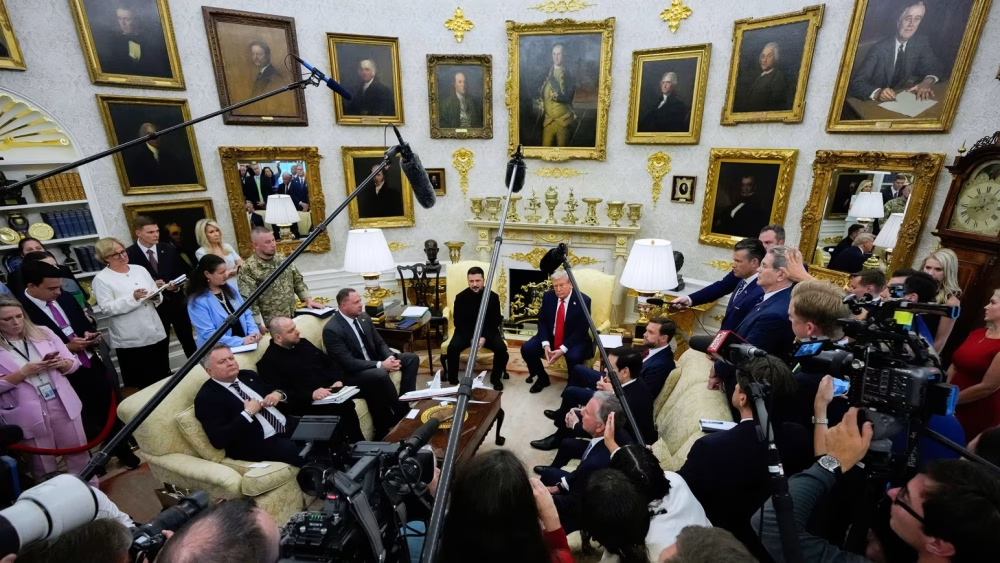
In a landmark gathering at the White House, U.S. President Donald Trump convened a pivotal meeting with Ukrainian President Volodymyr Zelenskyy and a powerful delegation of European leaders—including French President Emmanuel Macron, British Prime Minister Keir Starmer, German Chancellor Friedrich Merz, Italian Prime Minister Giorgia Meloni, and Finnish President Alexander Stubb, as well as EU Commission President Ursula von der Leyen and NATO Secretary-General Mark Rutte—to negotiate the pathway to peace in Ukraine and examine security assurances in the wake of escalating tensions.
1. Security Guarantees Take Center Stage
At the heart of the summit was a robust discussion on NATO-style security guarantees for Ukraine—a proposal that gained fresh momentum following Trump’s earlier face-to-face meeting with Russian President Vladimir Putin in Alaska. White House Special Envoy Steve Witkoff confirmed that Russia had tentatively agreed to such guarantees, a breakthrough hailed by European officials as a critical step forward.
2. Ukrainian Resolve: No Concession Without Certainty
President Zelenskyy, arriving early and addressing the media with a calm but firm demeanour, made it unmistakably clear: while all parties shared an urgent desire to end the war, Ukraine would not compromise its territory. He emphasized his rejection of any outcome mirroring the forced losses of Crimea and eastern regions in 2014, insisting that any pause in fighting must be paired with credible and enforceable security measures.
3. A Shift in Tone: Cordiality Over Confrontation
This high-stakes meeting marked a stark contrast to earlier tense encounters between Trump and Zelenskyy—particularly one in February, often described as explosively confrontational. This time, the Oval Office greeted Zelenskyy with a noticeably warmer atmosphere. Trump, relaxed and visibly more diplomatic, even lightened the mood with a quip about Zelenskyy’s formal attire during a press moment, signaling a more tempered tone of engagement.
4. Ceasefire: Continued Divergence
The matter of a ceasefire remained deeply contested. European leaders, especially Macron and Merz, insisted a ceasefire was essential before any further peace negotiations could proceed. Trump, however, expressed reservations—arguing that a ceasefire might skew battlefield advantages and deter progress—a stance he reaffirmed during the summit and in subsequent statements.
5. Looking Ahead: Trilateral Peace Talks in the Offing
Despite unresolved tensions, Trump announced plans for a future trilateral summit involving himself, Zelenskyy, and Putin—aimed at driving the peace process forward. He portrayed the outcome of the day’s discussions as a “good early step” toward peace, anticipating real progress in coming weeks.
6. Russia Reacts with Caution—and Denial
While the U.S. and several European leaders heralded the possibility of NATO-style security guarantees, Moscow swiftly backpedaled. A Kremlin-endorsed statement rejected the notion of NATO troops deploying to Ukraine, emphasizing a steadfast opposition to Western military presence on Ukrainian soil.
7. Casualties Amid Diplomacy
The summit’s diplomatic drive stood in sharp contrast to grim reality: just hours before the meeting, Russia launched a devastating drone and missile attack on Kharkiv, causing multiple casualties, including a child, and highlighting the urgency of finding a diplomatic resolution even as violence continues


