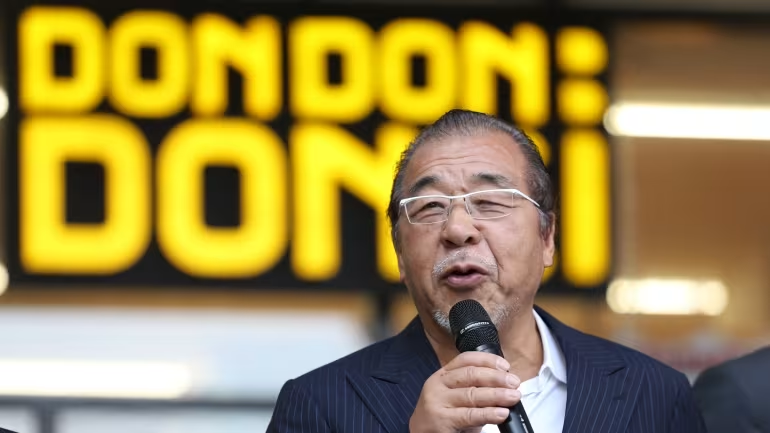
Tokyo, 22 September 2025 — Takao Yasuda, the founder who transformed Don Quijote into the flamboyant “Don Don Donki” phenomenon, is now placing the spotlight on his 24-year-old heir as the retailer gets ready to navigate the complex path of succession. Known for its carnival-like stores piled high with everything from quirky trinkets to premium brands, Don Don Donki has grown into a ¥3 trillion (approximately US$21 billion) empire under Yasuda’s leadership. Yet, as questions of inheritance, leadership, and future strategy come into play, both opportunities and challenges lie ahead.
Inside Don Don Donki stores, the sensory overload—the neon signage, the packed aisles, “blaring jingles”—has become part of the brand’s identity, attracting tourists and locals alike. Yasuda has built style and bulk into the DNA of the operation, often placing unusual items side by side just to surprise and delight. Under his stewardship over the past three decades, the retailer has expanded aggressively in Japan and overseas. But with his successor now publicly in view, succession planning and the family’s approach to legacy are becoming topics of public and financial interest.
A Heir Emerges
The 24-year-old heir—whose name is being mentioned more frequently in corporate circles—is viewed as the generation that will shepherd the brand through a new phase of growth, possibly one more digital, more global, and more tuned to evolving trends among younger consumers. While the older generation built Don Don Donki on sheer retail theatre and relentless store expansion, the new heir is reportedly being groomed to adapt the brand to changing consumer behavior, sustainability concerns, and overseas expansion costs.
Observers note that Japan’s inheritance tax system is severe, and dynastic succession in major private companies has often been a tricky business. Families navigating this terrain must balance tax liabilities, spread of ownership, and clarity in leadership to avoid internal conflicts. In this case, Don Don Donki’s succession strategy appears to be unfolding well in advance, possibly helping mitigate those risks.
Growth, Expansion & Strategy
Don Don Donki’s strategy moving forward—under both the outgoing and incoming generation—includes continued store expansion. The parent company Pan Pacific International Holdings Corp. has plans to open hundreds of new outlets by 2035, particularly in tourist-facing locations. Demand from foreign visitors and overseas markets is seen as a key growth driver. Meanwhile, the heir presumably faces the challenge of modernizing operations without sacrificing the eccentric retail charm that has defined the brand.
Investors are also watching closely: store growth, overseas performance (outside Japan), and profitability amidst rising labor and real estate costs will all matter. With succession looming, market watchers expect transparency on share-holding shifts, corporate governance, and whether the new leadership will adjust store formats, eCommerce, or omnichannel integration.
The Significance of Succession
Succession in family-run retail giants often signals more than a change in name on the door. It can herald shifts in corporate culture, strategic priorities, and risk tolerance. For Don Don Donki, whose identity is so tightly bound to its energetic retail aesthetic, preserving that while scaling sustainably is no small task. Yasuda’s visible grooming of his heir suggests he is conscious of maintaining both the brand’s DNA and its future resilience.
For Japanese corporate watchers, the case offers an ongoing study in how large family businesses manage leadership transition in a regulatory, tax, and market environment that prefers caution.


