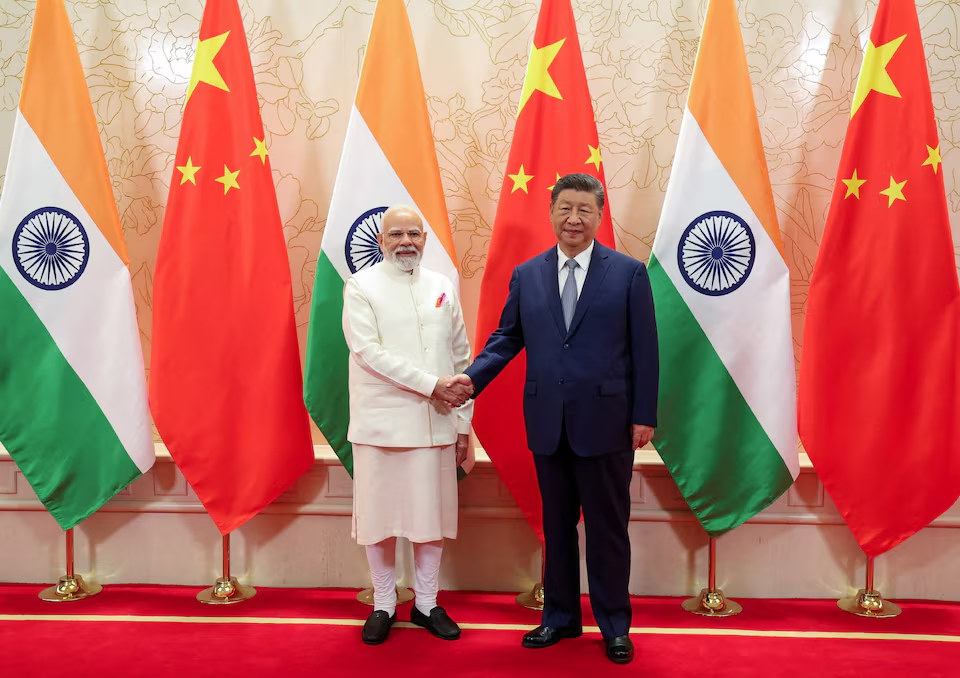
Tianjin, 31 August 2025 – In his first face-to-face meeting with Chinese President Xi Jinping since 2018, Indian Prime Minister Narendra Modi pledged a renewed commitment to strengthening ties between Asia’s two largest nations. Speaking on the sidelines of the Shanghai Cooperation Organisation summit, Modi prioritised mutual respect, regional stability, and economic cooperation in the face of mounting global trade tensions.
With Washington recently imposing 50% tariffs on Indian products over its Russian oil purchases, Modi called for “strategic autonomy” in foreign relations—emphasising that India–China ties should not be influenced by third-party pressures. He reaffirmed that bilateral engagements should be grounded in mutual trust and sensitivity, reflecting a pragmatic shift toward greater regional collaboration.
A Tangible Thaw at the Border
Arguments over the Himalayan border have long strained diplomatic ties, especially after the 2020 military clashes. Modi and Xi welcomed a return to “peace and stability” along the Line of Actual Control, anchored by a new border management agreement. Xi cautioned that border disputes must not overshadow broader bilateral cooperation, invoking ancient civilisational bonds between the two countries.
Reviving Connectivity and Trade
Clear signals of rapprochement emerged from their talks. Direct flights are set to resume after a five-year hiatus; China has lifted export restrictions on strategic goods such as rare earths, fertilisers, and tunnel-boring equipment. Visa restrictions are also being eased, restoring vital people-to-people and business links.
However, underlying challenges persist—India faces a staggering US$99.2 billion trade deficit with China, Beijing’s support for Pakistan endures, and tensions around Tibet’s hydropower projects and Dalai Lama remain unresolved. Both nations acknowledge the path to a stable relationship is both complex and long-term.
For Southeast Asia, a stable India–China relationship offers both hope and economic incentive. As both nations deepen regional integration through trade, infrastructure, and connectivity, ASEAN economies stand to benefit from greater investment and reduced geopolitical risk.
Moreover, their shared emphasis on “strategic autonomy” reshapes the regional order, signalling a shift toward multipolar diplomacy in Asia. Their diplomatic reset could pave the way for a more resilient, balanced regional framework amid intensifying U.S.–China rivalry.


