Tokyo, 11 September 2025 – Hedge fund Elliott Investment Management, now one of the largest shareholders in Kansai Electric Power with a stake estimated between 4% and 5%, issued a challenge to the Japanese utility to sharpen its investment appeal by divesting non-core holdings and bolstering shareholder returns. In a statement from London, Elliott emphasized its readiness to work collaboratively with management and stakeholders to realign the company around its energy-centric mission. Central to its proposal is the sale of over ¥2 trillion (approximately US $13.6 billion) in non-core assets—more than ¥1 trillion of which is tied up in real estate and additional value embedded in a construction company stake.
Elliott has urged Kansai Electric to boost its dividend from ¥60 to ¥100 per share and increase share buybacks, suggesting a recurring annual divestment of ¥150 billion to finance such enhancements in shareholder returns. The ambitious campaign reflects growing activist interest in Japan’s traditionally cautious corporate landscape—particularly notable given Kansai Electric’s leadership in nuclear power, its predominant energy offering.
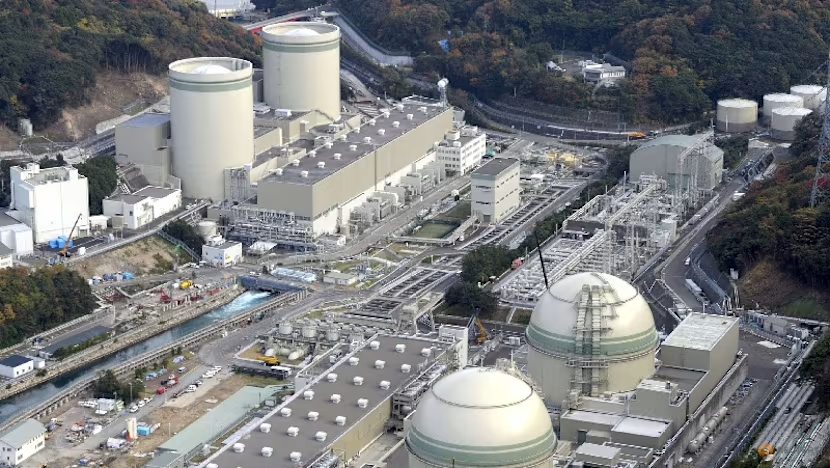
Earlier this fiscal year, Kansai Electric forecasted a 30% drop in earnings to ¥295 billion, choosing to maintain its existing dividend of ¥60 despite anticipated pressure on earnings. Separately, the company has taken its first concrete step toward new nuclear development since the Fukushima disaster by launching feasibility surveys for a new reactor at its Mihama power station.
Elliott’s move into Kansai marks the firm’s first activist foray into Japan’s sensitive nuclear sector, signaling a deepening confidence in governance-led reforms across the country’s energy industry. In past engagements—most notably with Tokyo Gas—Elliott successfully advocated for stronger capital returns and operational efficiency, outcomes that have resonated positively in markets.
Elliott’s campaign places Kansai Electric at a strategic crossroads. The firm’s push for divestment of underutilized assets promises to unlock significant liquidity, offering Kansai flexibility to invest in core energy infrastructure, including its emerging nuclear ambitions. Enhanced shareholder returns could also reinvigorate investor confidence in Japanese utility equities, once seen as overly conservative and operationally stagnant.
However, the intersection of activism and infrastructure in the nuclear space raises unique challenges. Regulatory scrutiny, public sentiment, and the long-term nature of energy investments could constrain asset sales and complicate negotiations. How Kansai navigates this balancing act will be closely watched across Asia’s capital markets and corporate circles.


