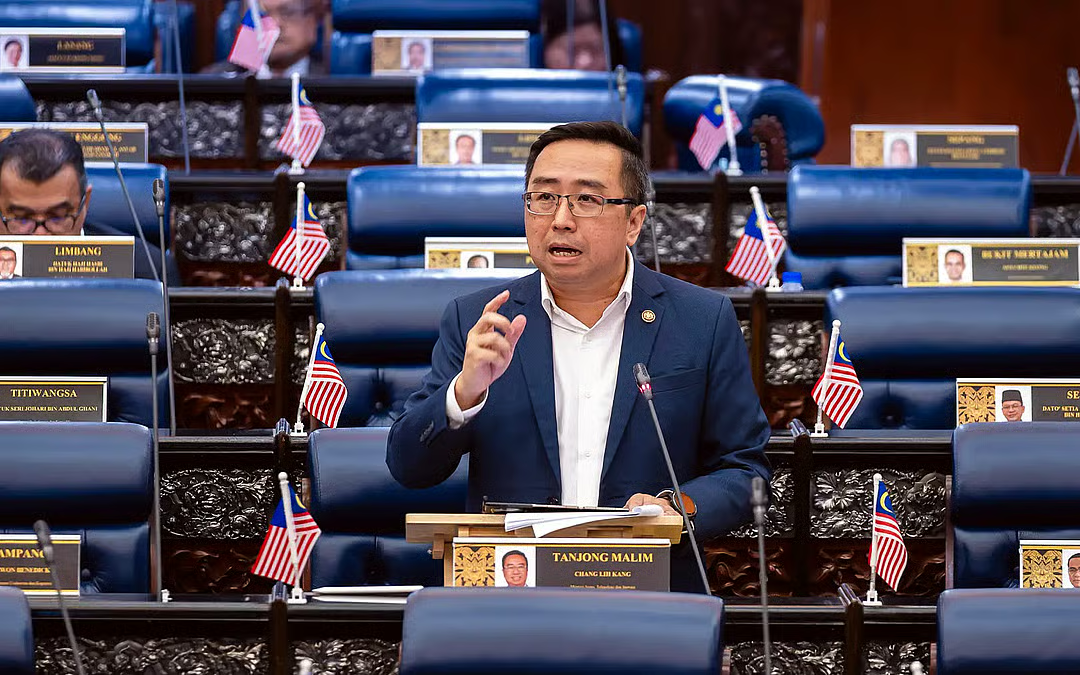
KUALA LUMPUR — Malaysia’s government revealed plans to establish a dedicated special fund. The announcement, which came on 25 August 2025 during a parliamentary winding-up speech, signals a significant shift in the nation’s commitment to handling nuclear by-products more responsibly and sustainably.
The proposed fund is envisioned as a vital resource aimed at complementing the existing regulatory and operational framework overseen by key authorities such as the Atomic Energy Licensing Board. Central to its purpose is the allocation of financial support for the safe and effective handling, storage, and disposal of radioactive waste. Officials emphasised that the initiative is intended not only to augment state mechanisms but also to bolster accountability within the industry. By mandating that the sector contribute to waste management costs, the fund aims to foster a culture where stakeholders play an active role in ensuring long-term environmental and public safety.
While parliamentary debate on the measure is still underway, the introduction of this fund marks a meaningful step forward. Policy watchers expect that it will complement broader efforts to rationalise waste governance and potentially serve as a blueprint for regional best practices.
This development comes amid wider environmental governance initiatives, including ongoing plans to consolidate waste management functions under a single agency that would tackle not only radioactive materials but also solid waste and e-waste. These plans, part of the 13th Malaysia Plan, underscore a growing emphasis on adopting greener and more streamlined practices across sectors.
By creating a dedicated funding mechanism, policymakers are striving to ensure that the complex and long-term challenges posed by radioactive waste are met with resilience—and sustained financial backing. The fund reflects a strategic recognition that environmental stewardship requires both regulatory oversight and fiscal readiness.
As the proposal advances through legislative scrutiny, stakeholders across industry, environmental advocacy, and civil service will be watching closely. With the groundwork being set for stronger institutional mechanisms and clearer financial accountability, Malaysia’s approach may set the stage for more robust, future-ready radioactive waste management in Southeast Asia.


