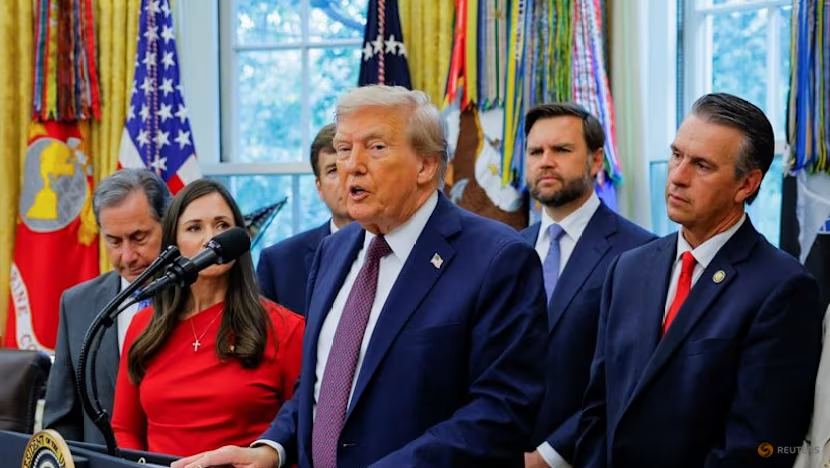
WASHINGTON, 2 September 2025 – U.S. President Donald Trump declared he was “very disappointed” in Russian President Vladimir Putin for failing to advance peace talks in Ukraine, delivering the statement during an interview on The Scott Jennings Radio Show as a self-imposed peace deadline loomed.
While the friction between the two leaders has grown, Trump provided few details on any specific consequences. He hinted, however, that his administration would be “doing something to help people live.” The modest imagery belied the high stakes and uncertainty swirling around negotiations. Trump also dismissed concerns about the deepening diplomatic ties between China and Russia, asserting, “We have the strongest military in the world by far… they would never use their military on us.”
Following their August summit in Alaska, Trump had expected a meeting between Putin and Ukrainian President Volodymyr Zelenskyy before a potential trilateral summit—a vision now under strain as both sides report that an agreement remains out of reach.
The Analysis
1. Escalating U.S.–Russia Diplomatic Tensions
Trump’s blunt expression of disappointment underscores rising tensions between Washington and Moscow. It signals a potential shift from diplomacy to punitive measures—possibly new sanctions—if peace remains elusive.
2. Impact on ASEAN and Asia
Stalled negotiations could prolong regional instability, raising fuel prices and prompting shifts in trade flows affecting ASEAN economies. Countries like Malaysia, Indonesia, and Thailand must brace for prolonged uncertainty and uphold diversified external ties.
3. Limited Lawfare Strategy
Trump’s vague remarks—promising action without specifics—point to cautious diplomacy. For Asia’s policymakers, the takeaway is clear: stay agile, monitor U.S.–Russia developments closely, and prepare for unexpected policy shifts.


