
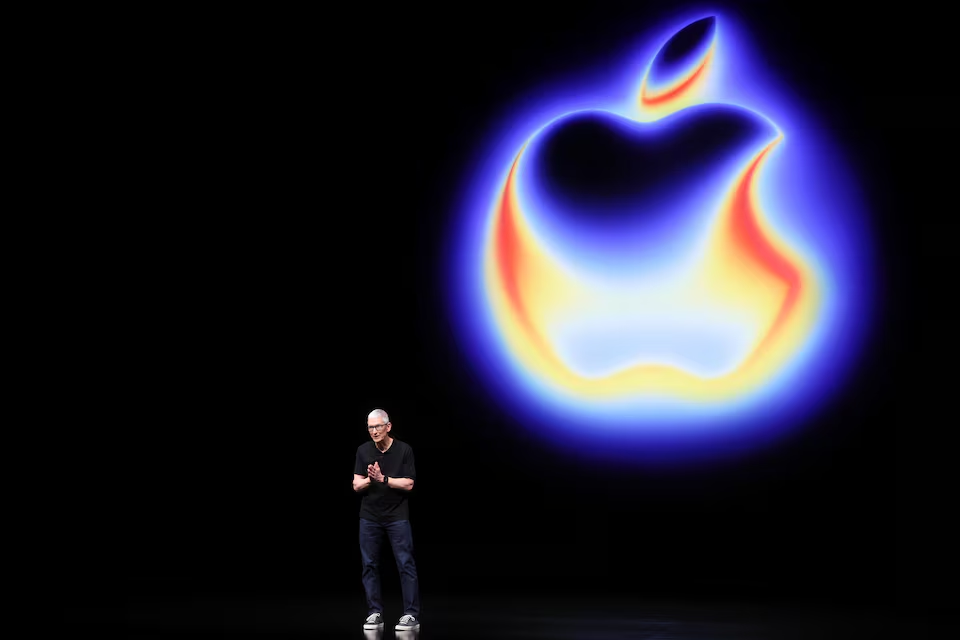
CUPERTINO / KUALA LUMPUR, 9 September 2025 — Apple has once again set the global tech industry abuzz with the unveiling of its newest flagship devices: the iPhone Air, billed as the slimmest and most refined iPhone ever created, and the iPhone 17 series, which integrates enhanced AI capabilities and durability upgrades. The double launch at Apple Park was the highlight of the company’s “Awe-Dropping” keynote event, positioning Apple to defend and extend its dominance in the global premium smartphone market.
The iPhone Air: Apple’s Slimmest Ever, Designed for Power and Portability
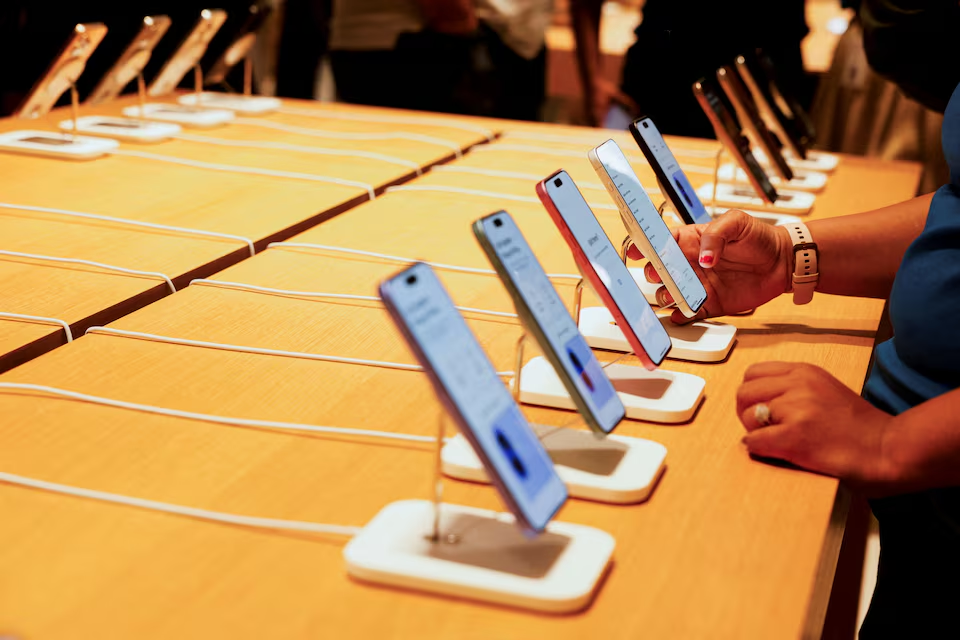
The headline-grabbing iPhone Air measures just 5.6 mm thick, making it the thinnest iPhone in history. Constructed with a titanium frame for strength and a newly engineered high-density battery, the Air promises to deliver Pro-level performance without compromising portability. Apple executives likened it to the MacBook Air moment for iPhones, suggesting a design leap that redefines expectations for modern smartphones.
Observers believe this new form factor will appeal to customers holding older devices who are ready for a substantial upgrade. Analysts also note that Apple may be preparing the market for future foldable or dual-screen devices, with the Air serving as a transitional innovation.
The iPhone 17 Series: Brighter, Smarter, and AI-Centric
The new iPhone 17 comes equipped with the A19 Bionic chip, built on 3nm architecture, promising faster speeds, improved energy efficiency, and more robust on-device artificial intelligence performance. This upgrade underscores Apple’s pivot toward AI-first experiences, from improved Siri interactions to enhanced camera-based features.
The display has been refined with a brighter, scratch-resistant coating, promising improved usability in outdoor environments and durability in everyday use. Meanwhile, the redesigned front camera sensor enhances both selfies and horizontal compositions, catering to the growing social and content creator markets.
Combined, these features reflect Apple’s intention to deepen user engagement with AI-powered services while solidifying its reputation for quality, design, and resilience.

A Broader Strategy: Anchoring the Ecosystem
Apple is also framing the iPhone Air and iPhone 17 as integral pillars in its expanding ecosystem. Both devices integrate seamlessly with Apple Intelligence, introduced earlier this year, enabling advanced tasks such as real-time translations, smarter notifications, and improved health monitoring.
The Air complements Apple’s new AirPods Pro 3—which feature heart-rate monitoring and live translation—by delivering a consistent hardware-software ecosystem that fuses communication, wellness, and lifestyle features. Together, they anchor Apple’s long-term strategy to capture more value in services while reinforcing loyalty through tightly integrated hardware.

Global Market Implications
For Asia-Pacific, where Apple faces fierce competition from Samsung, Xiaomi, and Huawei, the launch represents both an opportunity and a challenge. The iPhone Air’s slim design could resonate strongly in markets like Japan, South Korea, and Singapore, where consumers prioritize sleekness and cutting-edge technology. Meanwhile, the iPhone 17’s AI capabilities may help Apple fend off Chinese rivals who have been aggressively embedding generative AI features into their devices.
In emerging Southeast Asian markets, however, Apple still faces the challenge of affordability. With the iPhone Air priced at US$999 and the iPhone 17 starting at US$799, adoption may hinge on installment financing schemes and Apple’s ongoing expansion of trade-in programs.

Investor and Industry Reactions
Investors greeted the launch with optimism, viewing the devices as a strong response to slowing global smartphone sales. Analysts at Wedbush Securities forecast that Apple could see a “supercycle” of upgrades, particularly among customers holding onto iPhone 12 or earlier models. The company’s focus on AI-driven differentiation also reinforces its positioning against Android rivals at a time when generative AI is reshaping consumer electronics.
For the supply chain, the emphasis on slimmer batteries, titanium construction, and advanced chipsets is likely to generate additional opportunities—and strains—for suppliers across Asia, from TSMC’s semiconductor foundries in Taiwan to component makers in South Korea, Japan, and Malaysia.


