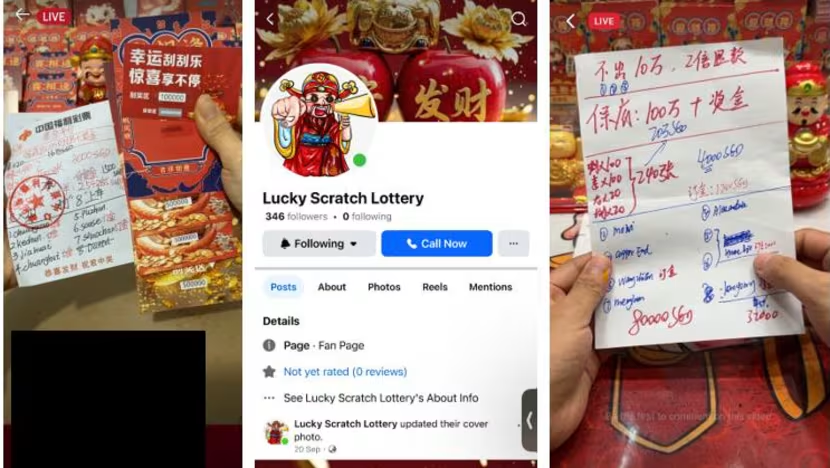
Singapore, 18 October 2025 — The Singapore Police Force (SPF) has issued an advisory after uncovering more than S$160,000 (US$123,500) in losses linked to lucky-draw scams and e-commerce fraud conducted via live streams on social platforms since August.
At least 30 “lucky-draw” scams and 13 e-commerce schemes were reported during the period. The scams were often hosted via Facebook Live sessions, where unsuspecting viewers were lured into participating.
How the Scams Worked
In the lucky-draw variant, victims encountered live-stream promotions of scratch-cards promising cash prizes. After purchasing the cards, they were asked to pay additional sums to “upgrade” their winning chances or to claim their supposed payout, often prompted by deferred payment offers. When “winnings” were supposedly achieved, further transfers were demanded for “administrative fees” or processing. Victims realised they had been scammed only when no prize arrived or police verification was sought.
In the e-commerce variant, live-streams marketed “gold-mine bags”, bags claimed to contain gold or offer a chance of containing gold. Viewers were asked to purchase these, then enticed to buy higher-“chance” bags if they did not win, with the promise of repurchase of gold at above retail price. Again, victims were asked for further transfers and instructed to pay via QR code transfers.
Key Risk Signals & Advice from Authorities
The SPF and coordinating agencies flagged several warning signs and issued the following key advice:
- Do not transfer money to persons you cannot personally verify.
- Download and use the ScamShield app to block suspicious calls/SMSes, set adequate in-app transaction limits, and enable bank “Money Lock” features.
- Contact your bank immediately if you suspect fraud and report to the police via official channels.
Why This Matters for the Region
While the losses cited are under S$200,000 in Singapore, the case underscores broader regional vulnerabilities:
- Social-media live-streaming commerce is rapidly gaining traction across Southeast Asia, and fraud variants may replicate in Malaysia, Indonesia and beyond.
- Payment-QR ecosystems (e.g., DuitNow, PayNow) are globally scalable, meaning regional fraud rings may exploit cross-border flows.
- The incident reflects how real-time interactive media (live streaming) enables high-velocity fraud, raising the stakes for policing and payment-platform oversight across ASEAN.
Outlook and Preventive Measures
As livestream commerce evolves, regulatory and platform-governance responses may be required: tighter identity verification for live-stream sellers, enhanced monitoring of high-risk “upgrade-purchase” models, and stronger coordination between fintech, social-media platforms and policing agencies.
For consumers in Malaysia and the region, the key takeaway is clear: Glamourous livestream offers of “scratch to win” or “bag full of gold” may hide structured fraud mechanisms. Vigilance, verification, and skepticism remain vital, especially in an age where instant-payment infrastructure and live-stream selling converge.


