
Kuala Lumpur, 12 March 2026 – Social media giant Meta has taken action against large criminal scam networks operating across Southeast Asia, disabling more than 150,000 accounts linked to organised fraud operations in the region.
The crackdown was carried out in collaboration with international law-enforcement agencies and regional authorities, including Thailand’s Royal Thai Police anti-cyber scam centre. Investigations led to the arrest of 21 suspects believed to be connected to sophisticated online fraud operations targeting victims worldwide.
Industrial-Scale Scam Networks
Authorities say many of the scam operations are based in parts of Southeast Asia such as Cambodia, Myanmar and Laos, where organised criminal groups run large compounds dedicated to online fraud schemes.
These syndicates often conduct romance scams, cryptocurrency investment fraud and impersonation schemes, tricking victims into transferring money after building trust through social-media conversations.
The scam operations have become increasingly sophisticated, with criminal groups using advanced technology, including AI-generated messaging and multilingual scripts, to target victims across multiple countries.
Human Trafficking and Forced Labour
Beyond financial crime, investigators and human-rights organisations say many of these scam centres are tied to human-trafficking networks. Victims from different countries are reportedly lured with fake job offers before being forced to participate in online scams inside heavily guarded compounds.
The United Nations estimates that tens of thousands of people in the region may be trapped in such operations, which generate billions of dollars in illicit revenue annually for organised crime groups.
Meta Introduces New Anti-Scam Tools
In response to the growing threat, Meta is rolling out additional safety features across its platforms, including Facebook, WhatsApp and Facebook Messenger.
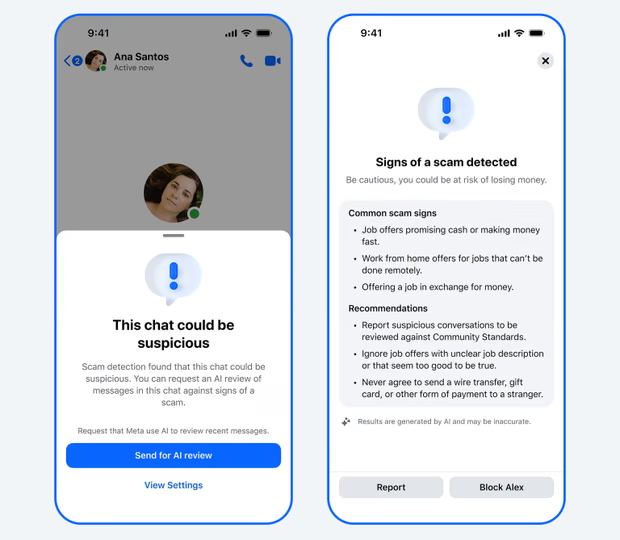
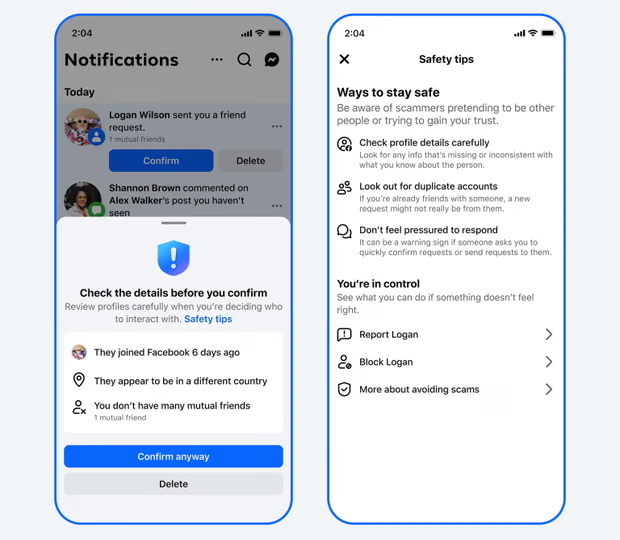
New protections include alerts for suspicious friend requests, warnings about unusual account-linking attempts on WhatsApp and AI-powered scam detection tools within Messenger. These systems are designed to flag potential fraud early and help users block or report suspicious accounts.
The recent operation follows an earlier crackdown in late 2025 that removed roughly 59,000 scam-related accounts, highlighting the scale of the problem and the continued presence of organised cyber-crime networks in the region.
A Growing Global Cybercrime Challenge
Experts say the crackdown illustrates how online scams have evolved into a transnational industry, combining cybercrime, financial fraud and human trafficking.
While technology companies and law-enforcement agencies are increasing cooperation to disrupt these networks, authorities warn that dismantling the scam ecosystem will require sustained regional coordination and stronger enforcement against organised criminal syndicates operating across borders.


