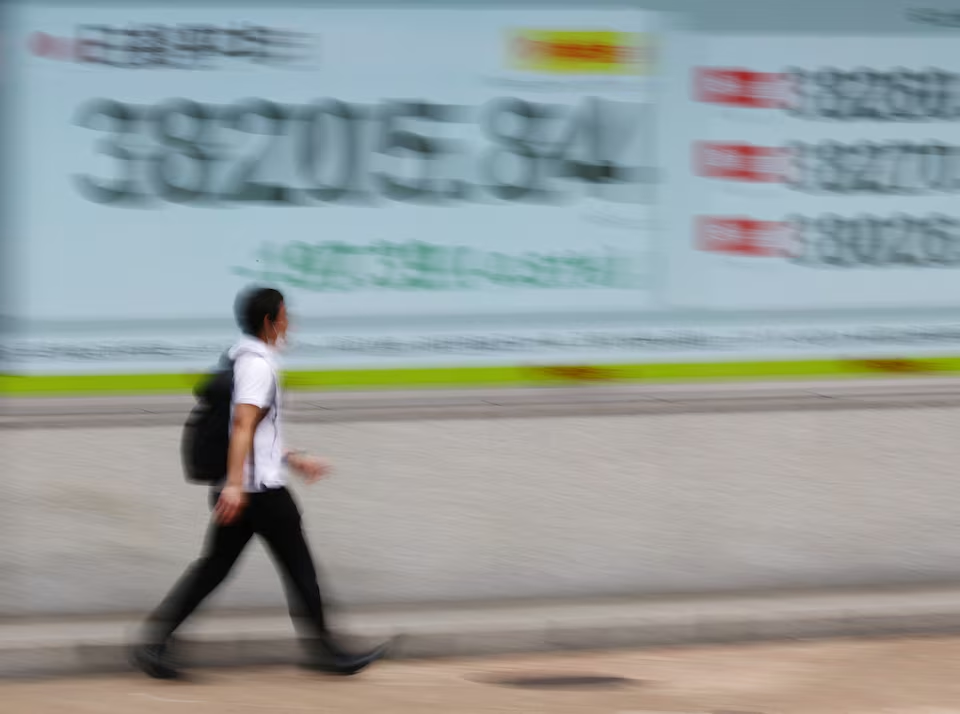
Singapore, 21 October 2025 — Equity markets across Asia-Pacific climbed on Tuesday, lifted by renewed optimism around U.S.–China trade negotiations and a near-certain shift in Japanese leadership towards a pro-stimulus agenda. The rally suggests regional investors are embracing risk once more.
The broadest index of Asia-Pacific shares outside Japan rose nearly 0.94 %, hitting its highest level in over four and a half years. Meanwhile Japan’s Nikkei 225 index edged past 50,000 points for the first time as markets priced in the likely appointment of Sanae Takaichi as prime minister, backed by expectations of fiscal stimulus and dovish monetary policy.
Key Drivers
- Trade-war easing hopes: U.S. President Donald Trump indicated progress toward a “fair deal” with China’s President Xi Jinping, while also downplaying the risk of conflict over Taiwan — stoking investor hopes of de-escalation.
- Japan leadership shift: With markets expecting Takaichi to become Japan’s first female prime minister and favour stimulus, investors increased exposure in Japanese equities and weakened the yen modestly in anticipation of policy changes.
- Credit risk fears momentarily dampened: Market jitters around U.S. regional-bank bad-loan exposure and the U.S. government shutdown were sidelined as traders focused instead on the upside in equity momentum.
Regional Implications for ASEAN and Asia
For Southeast Asia and Malaysia-based investors, several themes stand out:
- Risk-asset rotation: As trade-tension worries fade, capital may shift from safe-haven assets into cyclicals, commodities and equities with strong exposure to trade flows.
- Japanese stimulus spill-over: If Japan indeed pursues expanded fiscal policy, Asia-Pacific exporters and investors could benefit via stronger Japanese demand and supply-chain linkages.
- China linkage remains fragile: While trade-optimism helps, structural issues in China (property stress, weak household demand) still pose underlying risk, markets may remain sensitive.
- Caution on sustained rally: The surge is sentiment-driven; without confirmed policy outcomes or improved fundamentals, the rally remains vulnerable to reversal.
Outlook & Watch-points
- Investors will keep focus on the upcoming U.S.–China meeting and any concrete outcomes regarding trade, tariffs or technology transfer.
- The Bank of Japan’s (BOJ) response to the political change in Tokyo will be watched closely — especially on yield-targeting, asset purchases and rate guidance.
- For ASEAN markets, monitoring how regional exporters and industrial sectors respond to the ripple-effect from Japan and China will be critical.


