
The Ledger Asia | Editor’s Pick
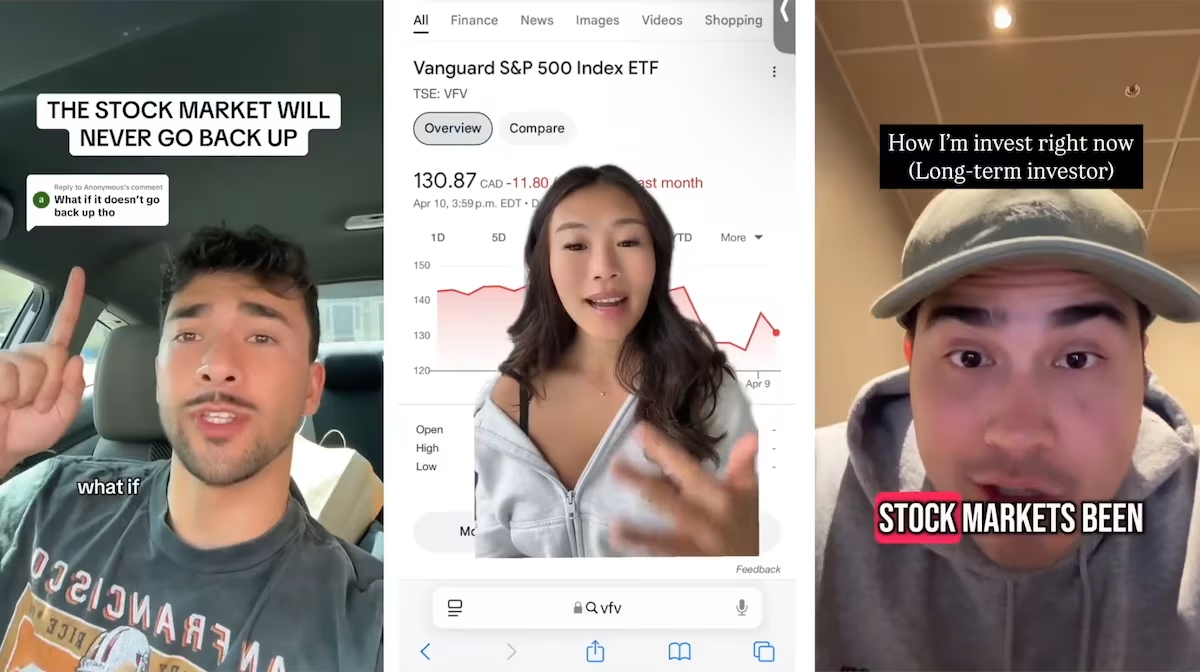
ASIA, 7 December 2025 — Scroll through TikTok, Instagram, YouTube, or even LinkedIn today, and you’ll see them everywhere: finfluencers, financial influencers who make markets sound fun, investing feel friendly, and personal finance accessible to the masses.
Once considered fringe content creators, finfluencers in Asia have now become a mainstream force, shaping the decisions of millions of young investors who may never have spoken to a traditional financial adviser.
But the big question is:
Are they legitimate?
And if so, why are financial institutions, from banks to brokerages, lining up to work with them?
This is the story of how Asia’s finfluencers went from being dismissed as social-media “wannabe experts” to becoming some of the region’s most influential voices in finance.
Why FinFluencers Became Unstoppable in Asia
Asia is the perfect environment for finfluencers to flourish. The ingredients were all there:
- A massive population of young, digital-native investors
- High smartphone penetration and low barriers to content consumption
- Fast-growing retail investing communities
- A distrust of formal financial jargon
- A hunger for relatable, bite-sized explanations about money
When the pandemic accelerated retail trading across the region, finfluencers became the go-to guides for a new generation of investors who learned about financial markets the same way they learned recipes, skincare routines and travel hacks, through creators who sound like friends, not lecturers.
They explain concepts such as credit scores, ETFs, inflation, recession indicators, crypto wallets, or property loans in 30 seconds, using plain language, humour, memes, and personal stories.
For millions, this is more engaging than reading a bank brochure or attending a seminar.
Are They Legitimate? In Most Cases, Yes, but With Caveats
Like any ecosystem, Asia’s finfluencers exist on a spectrum.
1. The Highly Credible Professionals
These include former bankers, licensed financial advisers, chartered analysts, economists, CFP holders, and financial journalists. They use social media as an extension of their professional outreach.
Their content tends to be accurate, measured, and focused on education rather than hype.
2. The Educators & Enthusiasts
They are not licensed advisers but share:
- Personal finance habits
- Budgeting systems
- Retirement planning steps
- Risk awareness
They don’t pick stocks or offer financial advice, but they build trust by simplifying complex topics.
3. The Questionable Operators
These may:
- Promise “guaranteed returns”
- Promote high-risk schemes
- Push affiliate links disguised as financial wisdom
- Overhype crypto, forex or get-rich-quick strategies
These creators contribute to regulatory scrutiny, and Asian regulators are now stepping in.
What regulators say
Singapore’s MAS, Malaysia’s SC, India’s SEBI, and Indonesia’s OJK all recognise that finfluencers play a major educational role but warn that they cannot provide regulated financial advice unless licensed.
Most credible finfluencers now disclose partnerships, avoid giving personalised recommendations, and emphasise “this is not financial advice”.
So yes, the legitimate ones are legitimate.
But Asia’s regulators are right to keep watch.
Why FinFluencers Are So Impactful to Asian Investors
1. They Speak Human, Not Finance
Traditional financial institutions often communicate in:
- Risk profiles
- Portfolio optimisation
- Regulatory disclaimers
- Dense product brochures
Meanwhile, finfluencers communicate in:
- Simple explanations
- Step-by-step demos
- Short videos
- Personal stories
In a region where financial literacy is still developing, this matters.
2. They Reach the “Unreachable” Audience
Banks traditionally struggle to reach:
- Gen Z
- Young women investors
- Gig-economy workers
- First-time salary earners
- Regional language speakers
Finfluencers thrive here.
They create content in Bahasa Indonesia, Tamil, Tagalog, Thai, Vietnamese, and dialects that mainstream institutions rarely use. They meet audiences where they already spend time, in social feeds.
3. They Reduce Fear — The Biggest Barrier to Investing
Many Asians avoid investing not because they lack money, but because they are intimidated.
Finfluencers flip that script by saying:
- “Here’s how I made my first mistake.”
- “Here’s what I wish I knew at 25.”
- “Here’s how I budget as a fresh graduate.”
This authenticity breaks emotional barriers that banks have struggled for decades to overcome.
4. They Build Trust Through Relatability
People trust people who sound like them.
Finfluencers show:
- Daily routines
- Real struggles
- Real financial journeys
When a creator shares how they paid off debt, navigated a home loan, or built an emergency fund, followers feel understood rather than spoken down to.
5. Their Influence Is Immediate and Measurable
A single video can reach:
- 100,000 viewers in an hour
- Millions in a day
- Entire demographics unreachable through traditional media
This velocity is why markets, and banks, pay attention.

Why Banks and Financial Institutions Are Choosing FinFluencers
Banks used to rely on celebrity ambassadors or traditional media campaigns. Today, they are aggressively courting finfluencers.
1. Credibility With Younger Audiences
Finfluencers are not seen as corporate spokespeople; they are seen as:
- Friends
- Mentors
- Real people
If a bank launches a new savings account or app feature, a finfluencer can explain it in a casual and relatable way that feels trustworthy.
2. Finfluencers Can Translate Complex Products Into Real Use Cases
Banks struggle to explain:
- ETFs
- Robo-advisors
- Islamic finance products
- Fractional shares
- Unit trusts
- Retirement funds
Finfluencers break these down into actionable steps:
“Here’s how I used this.”
“Here’s how it works in daily life.”
This is the missing link between financial literacy and product understanding.
3. Massive Cost Efficiency
A creator partnership is often far cheaper than:
- Billboards
- TV ads
- Print campaigns
And the ROI is trackable through social analytics.
4. Cultural Influence Matters
Financial literacy is not just information, it is culture.
Finfluencers shape investment culture by:
- Normalising saving habits
- Encouraging long-term thinking
- Warning against scams
- Promoting diversification
- Reducing stigma around money conversations
Banks want to align with these cultural voices.
5. They Humanise Brands
Banks often appear rigid and bureaucratic.
Finfluencers soften their image, bringing:
- Personality
- Humour
- Humanity
In a hyper-competitive financial sector, this is invaluable.

Are FinFluencers the Future of Financial Communication in Asia?
Absolutely, but with balance.
The best outcome for Asia is a landscape where:
- Finfluencers educate responsibly
- Regulators set clear boundaries
- Banks partner with creators transparently
- Investors receive digestible, empowering information
- Harmful actors are filtered out
Asia’s financial future will be shaped not just by analysts and policymakers, but also by creators who know how to explain money in a way people actually understand.
Finfluencers aren’t replacing financial institutions.
They’re amplifying them, and making them relevant to a new generation.


