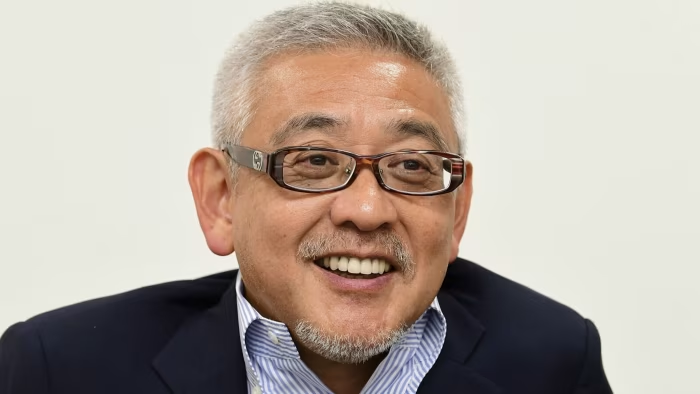
TOKYO, 30 September 2025 — Yoshiaki Murakami, a veteran activist investor known for challenging entrenched Japanese corporate norms, is again making headlines after taking a bold position in Fuji Media Holdings Inc., amassing a 16 % stake worth roughly US$700 million. The move has rekindled investor interest in Japan’s equity markets and stirred speculation about a renewed wave of activist campaigns.
Murakami’s timing is strategic. The broadcaster and media conglomerate has endured turbulence following a corporate scandal earlier in 2025, which prompted resignations of top executives, advertiser pullbacks, and a sharp decline in earnings. Seizing on the shock and disruption, Murakami and associated investment vehicles are positioning themselves to push for governance reforms, enhanced transparency, and a more aggressive capital-return posture.
A Return to the Activist Arena
Murakami, often referred to in Japan as a pioneer of shareholder activism, first gained prominence in the early 2000s with campaigns targeting underperforming companies and pushing for structural reform. His reemergence in this Fuji Media episode sends a strong signal: Japanese markets may be entering a new phase where activist pressure and market discipline gain more legitimacy.
In this instance, Murakami and his associates moved decisively during a period of weakness. With Fuji’s reputation damaged and shareholders unsettled, the 16 % stake instantly turns him into the largest external shareholder. His stakes confer both credibility and leverage to negotiate changes—whether in board composition, strategy, cost control, or dividend policy.
Market Resonance & Broader Implications
The implications of Murakami’s strategy ripple beyond Fuji. For Japan’s equity markets, which have long been dominated by passive ownership and insider control, this move could help catalyse a reawakening of shareholder activism. Analysts suggest that better alignment between capital markets and corporate governance may help lift valuations in a market that many see as undervalued.
Institutional investors are already paying attention. If Murakami succeeds in reshaping Fuji’s governance or unlocking hidden value, and if his approach proves repeatable, other activist funds may be emboldened to target underperforming firms across Japan. Such campaigns might accelerate reforms in sectors long criticized for inefficiency or opaque ownership structures.
That said, challenges remain. Activism in Japan, even with rising acceptability, still faces cultural resistance and regulatory constraints. Execution will require finesse: proposals must balance local norms, alignment with domestic stakeholders, and a sustainable roadmap for change.
Strategic Takeaways for Investors
- Valuation upside: If Murakami can unlock operational improvements or better capital allocation, Fuji’s shares may reprice meaningfully.
- Catalyst effect: Success could inspire broader activism in Japanese equities, helping re-rate the market as a whole.
- Due diligence matters: Activist strategies carry execution risk, especially in culturally conservative markets. Investors must assess the credibility of proposals and management responses.
- Opportunity for regional players: For Asian institutional investors, particularly regional funds, this episode offers a test case in cross-border activism and governance arbitrage.
As Murakami reasserts his presence, the question shifts from whether Japanese companies need change, to whether change can now be credibly realized. His bold move in Fuji Media may mark the beginning of a new era in Japan’s capital markets, one where investors assert a more active role.


