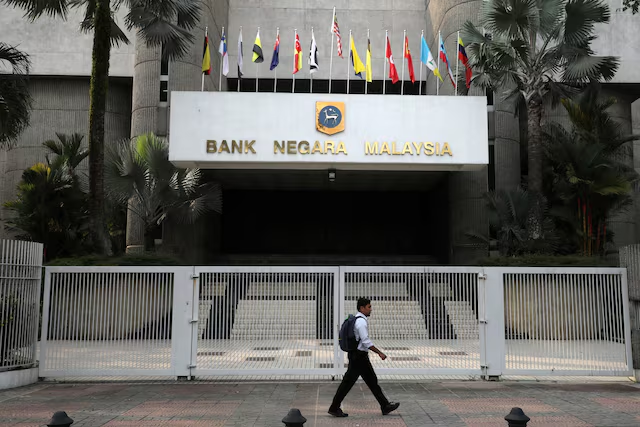
KUALA LUMPUR, Friday, 14 November 2025 – Bank Negara Malaysia (BNM) has expressed cautious optimism that Malaysia will continue to attract steady foreign direct investment (FDI) flows into 2026, underpinned by structural momentum in the electronics and semiconductor supply chain, and a booming data-centre industry.
At a joint press conference tied to the release of third-quarter GDP figures, Deputy Governor Marzunisham Omar highlighted several favourable drivers: recently concluded trade agreements with the United States, Malaysia’s strengthening role in the global electronics and semiconductor value chain, and government reform efforts aimed at improving the business ecosystem and up-skilling the workforce.
BNM Governor Datuk Seri Abdul Rasheed Ghaffour also noted the rapid expansion of the data-centre industry, one of Malaysia’s largest FDI contributors, and flagged that services-exports from data-centres had reached RM10.7 billion in the first nine months of 2025, a sharp increase year-on-year.
However, both officials emphasised that continued inflows are contingent on global uncertainty easing and ensuring that large investment projects deliver meaningful local linkages. For instance, the governor urged that data-centre investments must also strengthen upstream and downstream linkages, manage resource consumption (especially energy and water), and deepen human-capital development to maximise benefits.
Why This Matters & What to Watch
Why it’s important
- FDI is a critical growth lever for Malaysia’s next-phase economic strategy, especially given headwinds from slowing global demand and elevated external risks. A strong FDI pipeline supports manufacturing, exports and domestic investment spill-overs.
- Malaysia’s positioning in the electronics and semiconductor ecosystem means it stands to gain as companies diversify supply chains away from China. BNM’s public signal signals confidence in this structural shift.
- The data-centre sector’s growth highlights Malaysia’s role not just in manufacturing but in digital-economy infrastructure, shifting investment focus upstream towards services and tech exports.
Key points for investors & analysts
- The message from BNM suggests Malaysia remains a preferred destination for investors targeting Asia-Pacific manufacturing and data-infrastructure plays.
- However, the caveats around sustainable linkages and resource-management imply that not all FDI is equal: projects with stronger local content or downstream facilities may offer more durable benefits and are likely to garner greater government support.
- The central bank’s tone may influence investor expectations around Malaysia’s currency (ringgit) and interest-rate outlook: sustained FDI could bolster the ringgit and provide a tailwind for capital-flows, but unresolved resource or environmental constraints might dampen sentiment.
What to watch
- Official FDI inflow data for Q4 2025 and into 2026: whether the momentum seen in the data-centre and electronics segments holds, and whether the RM10.7 billion figure is exceeded.
- Major investment announcements: particularly in semiconductor fabs, data-centres, EV/battery manufacturing or renewable-powered manufacturing hubs in Malaysia.
- Policy and regulatory developments: including changes to data-centre licensing, energy-consumption rules, local-content requirements or up-skilling incentives.
- Resource constraints: how projects manage energy and water usage, and whether these become bottlenecks for continued FDI scaling.
- Ringgit and rate reaction: whether the improved FDI outlook leads to stronger currency flows or influences BNM’s policy stance amid global external risks.