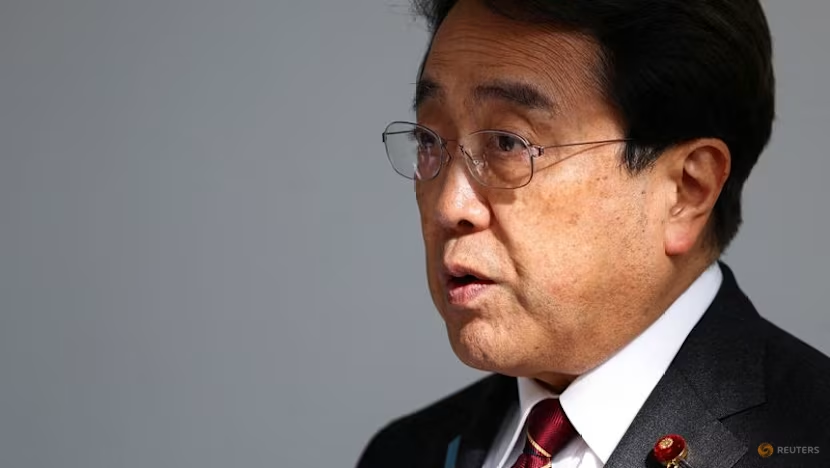
TOKYO, 9 September 2025 — The United States will reduce tariffs on Japanese goods, particularly automobiles and auto parts, to a flat 15 per cent from September 16, Japan’s chief tariff negotiator Ryosei Akazawa has confirmed. The move comes after weeks of speculation over when President Donald Trump’s executive order, signed earlier this month, would take effect.
The announcement was first made in a post by Akazawa on X, where he cited a notice in the U.S. Federal Register dated September 9 that formalised the new tariff levels. According to the document, the changes will come into force within seven days of publication, offering long-awaited clarity to Japanese exporters and carmakers who have been operating under uncertain conditions since July.
The tariff adjustment follows a bilateral deal struck in July between Washington and Tokyo, under which Japan committed to channeling more than US$550 billion in investments into the U.S. economy, while also agreeing to ramp up imports of American agricultural products. In return, the United States pledged to ease tariffs on Japanese auto exports, a sector that has long been a flashpoint in trade relations between the two allies.
For Japan’s automobile industry — a cornerstone of its export economy — the reduction represents a significant reprieve. Automakers such as Toyota, Honda, and Nissan have been contending with tariffs as high as 27.5 per cent, eroding competitiveness and profitability in the world’s largest car market. Analysts note that the lower 15 per cent levy will not only reduce costs but also help stabilise long-term planning for supply chains and pricing strategies.
The timing of the move is politically significant. For President Trump, who has long campaigned on renegotiating trade deals to bring what he calls “fairness” for American workers, the deal demonstrates both firmness and flexibility: protecting U.S. farmers while giving automakers breathing room. For Japan’s Prime Minister Fumio Kishida, it signals a breakthrough in securing economic assurances for one of the country’s most vital industries while deepening strategic alignment with Washington.
Industry watchers warn, however, that challenges remain. Global competition, shifting consumer demand toward electric vehicles, and continued supply chain pressures could still weigh on Japanese carmakers. Yet the tariff reduction has been broadly welcomed as a stabilising measure at a time of uncertainty in the global trade environment.
The decision also reverberates beyond the automotive sector, as it underscores a renewed commitment between the U.S. and Japan to strengthen economic ties amid rising competition from China and evolving geopolitical dynamics in the Asia-Pacific. The tariff cut marks not only a trade milestone but also a diplomatic gesture, reinforcing Japan’s role as one of Washington’s most reliable partners in the region.


