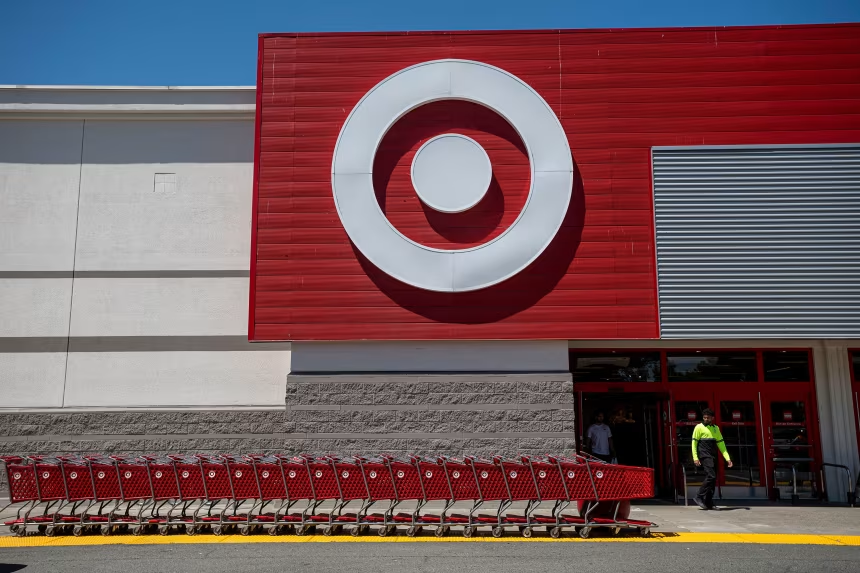
Target Corporation confirmed on August 20, 2025, that long-serving Chief Executive Brian Cornell will step down as CEO on February 1, 2026, transitioning into the role of executive chairman. His successor, Michael Fiddelke, the current Chief Operating Officer, has been chosen to lead the struggling retailer through a pressing turnaround. Fiddelke, who began his career at Target as an intern and has spent two decades with the company, faces immediate challenges in reversing a persistent sales slump and restoring the brand’s former vigor.
The announcement, widely anticipated, nevertheless rattled investors. Target’s stock plunged approximately 10% in early trading, signaling investor disappointment at the decision to promote from within rather than hire fresh leadership from outside. Many had hoped an external hire would signal a stark strategic shift to counter declining consumer interest.
Despite the negative market reaction, Target’s second-quarter earnings delivered some positive headlines: net sales reached $25.21 billion with adjusted earnings per share of $2.05—both modestly ahead of analyst expectations—even as comparable-store sales declined by 1.9%, better than projected declines nearing 3%.

Fiddelke outlined his three-pronged strategy: reclaim Target’s edge in trend-focused merchandising, enhance in-store experiences through improved presentation and inventory, and invest more heavily in technology across stores and its supply chain. However, investor sentiment remains cautious, and critics argue the internal appointment may perpetuate existing challenges rather than break the cycle.
Brian Cornell’s leadership, which began in 2014, was credited with revitalizing Target during pivotal moments—including emerging stronger from a data breach and orchestrating growth during the pandemic. Yet, the retailer has faltered recently amid rising inflation, inventory missteps, scaled-back diversity initiatives, and a resurgence of competitive pressure from players like Amazon and Walmart.
Fiddelke inherits a difficult mandate: to reinvigorate consumer interest, rebuild brand equity, and deliver growth in an environment marked by operational inefficiencies and shifting consumer behavior. His success—or failure—will be closely watched as the company seeks to regain momentum in a rapidly evolving retail landscape.
Source: CNN


