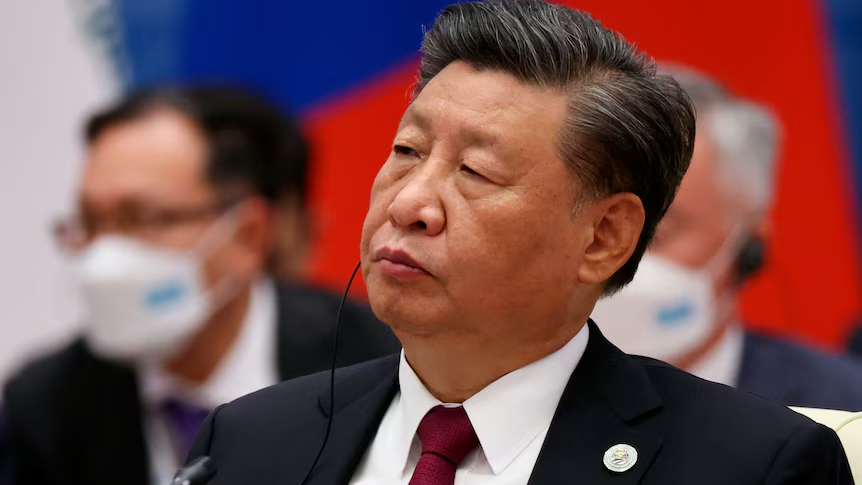
Chinese President Xi Jinping has issued a rare and pointed warning, cautioning that the failure of government bodies to promptly settle their bills with businesses could undermine trust in Beijing and damage the credibility of state institutions. His remarks, delivered at a leadership meeting in Beijing this week, underscore growing concerns that local governments’ mounting financial strain is beginning to ripple through China’s wider economy.
Xi highlighted that when companies providing goods and services to the state face long delays in receiving payment, the issue is not merely financial. Instead, it touches on the integrity of governance itself. Businesses that cannot depend on the government to honor its commitments risk losing confidence in the stability of China’s political and economic system. This erosion of trust, Xi warned, could become more damaging than the fiscal shortfalls themselves.
The comments come as local authorities across China grapple with severe debt burdens, a lingering property crisis, and sluggish growth that has curtailed revenue collection. In some regions, governments have reportedly postponed payments to contractors, suppliers, and service providers, while also cutting back on public projects. For many private companies, particularly small and medium-sized enterprises that depend heavily on state contracts, such arrears are creating serious cash flow pressures, jeopardizing jobs and business continuity.
Xi’s intervention signals awareness at the very top that these delayed payments are not simply administrative lapses but risks that could weaken broader confidence in China’s economic governance. By raising the issue publicly, the president sought to project accountability and urge officials to take corrective action swiftly. He also emphasized that honoring obligations to companies is not only a question of fiscal management but also a moral responsibility of the state.
The warning dovetails with other signs of strain within the Chinese economy. Reports have emerged of local governments struggling to pay wages to civil servants or relying on creative financing to keep essential services afloat. At the same time, Beijing has been pushing wealthier corporations and individuals to contribute more through taxes and “voluntary donations,” reflecting a tightening financial environment.
Analysts note that Xi’s remarks carry both economic and political weight. On the economic side, they highlight the risks of cash flow disruptions across supply chains that could dampen business activity just as China tries to stabilize growth. On the political side, they suggest recognition that faith in government reliability is integral to sustaining social stability, particularly as Beijing faces domestic and international scrutiny over its handling of the economy.
Ultimately, Xi’s warning reflects a delicate balancing act: China’s leaders must manage heavy debt loads and revenue shortfalls without sacrificing the trust of the very businesses and entrepreneurs that power the nation’s economy. How effectively Beijing addresses these unpaid obligations may prove pivotal in shaping confidence in China’s governance in the months ahead.


