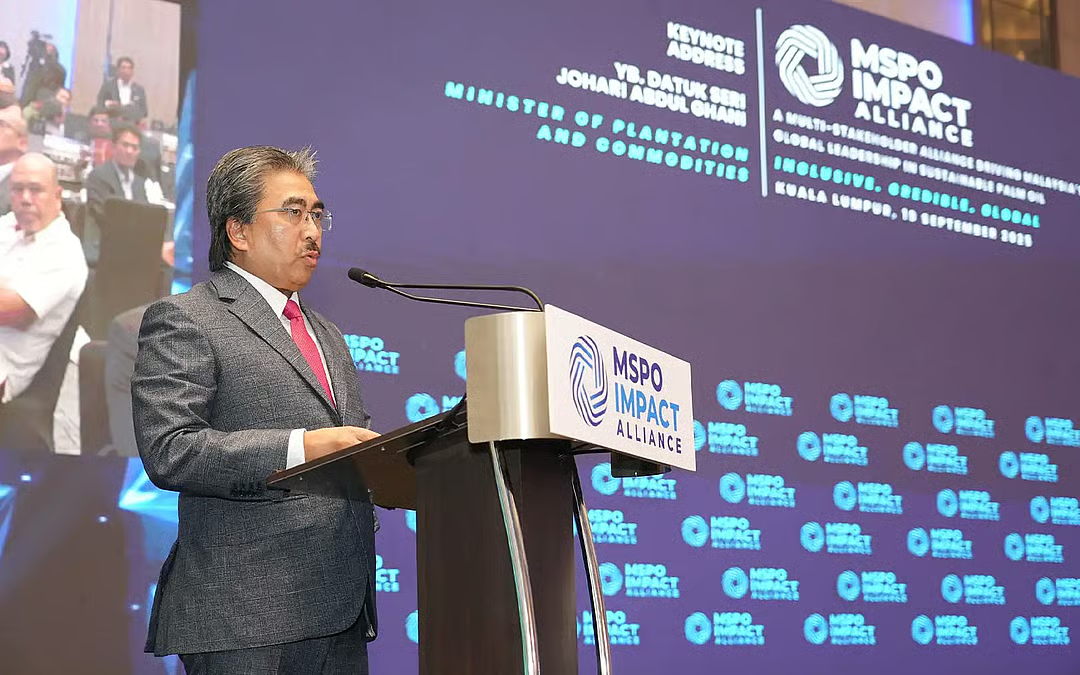
Kuala Lumpur, 19 September 2025 — The Malaysian Sustainable Palm Oil (MSPO) certification scheme is stepping up its efforts with a new platform designed to deepen Malaysia’s credibility in sustainable palm oil, especially amid growing demand for traceability, ethical labour practices, and environmental stewardship.
Under the platform, the MSPO is expected to coordinate stakeholders — from plantation operators and smallholders to processors, exporters and certifying bodies — to ensure that Malaysia’s palm oil production meets international benchmarks for sustainability. The move aligns with broader goals under the 13th Malaysia Plan, which emphasises the transition of the country’s agricultural sectors toward more resilient, sustainable, and innovation-led growth.
Key Features & Drivers
- Strengthened MSPO Standard (MSPO 2.0): Introduced in January 2025, MSPO 2.0 imposes stricter requirements for full supply-chain traceability, legal compliance, social responsibility, and environmental protection. It aims to ensure that palm oil labelled under MSPO is deforestation-free and meets labour rights criteria.
- Smallholder Participation: Recognising that a large portion of Malaysia’s oil palm growers are smallholders with smaller holdings, the platform aims to simplify compliance, provide training, and improve access to financing for replanting and other sustainability practices. Incentive schemes like TSPKS 2.0 are already helping in this regard in Sabah and other states.
- Enhanced Market Access & Regulatory Alignment: With tightening regulations overseas (for example, the EU’s Deforestation Regulation), the platform is seen as a mechanism to ensure Malaysian palm oil remains competitive in global markets. It supports Malaysia’s push to maintain sustainable credentials recognized internationally.
Why This Matters
- Economic Significance: Palm oil remains one of Malaysia’s major export crops. Ensuring it is produced sustainably is essential not only for environmental reasons but also for preserving market access, especially among buyers and jurisdictions with high ESG standards.
- Reputation & Trust: As global consumers and regulators increasingly demand transparency (including proof of legal land titles, labour conditions, and environmental impact), MSPO’s stronger platform helps build trust in Malaysia’s palm oil supply chain.
- Risk Mitigation: Agricultural sectors are exposed to regulatory, trade and environmental risks (deforestation bans, carbon regulations, supply chain disruptions). This platform is viewed as a strategic buffer.
Outlook
The effectiveness of the platform will depend heavily on its ability to deliver on key fronts: how well smallholders are supported to comply, how efficiently traceability is implemented, and whether the MSPO can maintain enforcement of its standards.
As the regulations currently evolve (MSPO 2.0, EU-aligned standards, etc.), Malaysia appears committed to ensuring its palm oil industry remains not just a production powerhouse, but a leader in sustainable, ethical, and globally acceptable practices.


