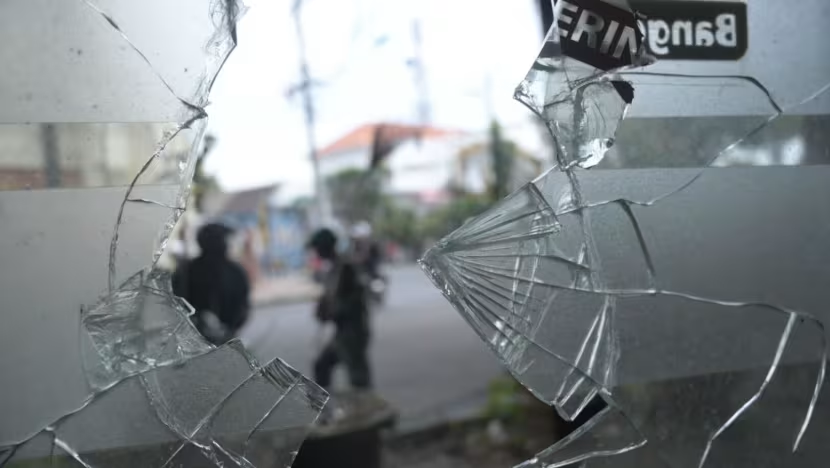
JAKARTA, 30 August 2025 – A wave of violent protests has erupted across Indonesia following the death of 21-year-old delivery rider Affan Kurniawan, who was fatally run over by a police armored vehicle during a demonstration. The incident, livestreamed and shared widely on social media, has ignited deep public outrage, intensifying nationwide protests against state brutality and legislative excess.
The unrest, initially sparked by public dissatisfaction over lawmakers receiving lavish monthly housing allowances—nearly ten times Jakarta’s minimum wage—escalated after the footage of Kurniawan’s death went viral. Protesters, including students and ride-hailing drivers, have taken to the streets in Jakarta, Surabaya, Bandung, Yogyakarta, and Makassar, clashing with riot police and targeting government buildings.
Violence, Arrests, and Government Response
In Makassar alone, regional parliament buildings were torched by mobs, leading to three deaths and five injuries among those trapped inside. Authorities have made over 950 arrests in Jakarta, with 25 police officers also requiring medical treatment due to clashes. In a dramatic turn, properties including TransJakarta bus stations and transportation infrastructure were vandalised or destroyed in the chaos.
President Prabowo Subianto, visibly shaken by the incident, delivered an address expressing deep sorrow and condemning police excess. He confirmed that seven officers tied to the incident have been detained and promised a full, transparent investigation. The vehicle’s driver remains unidentified. As a gesture of goodwill, Prabowo personally visited Kurniawan’s family and pledged state support.
Political and Institutional Implications
These protests represent a pivotal challenge to President Prabowo’s administration less than a year into his tenure. Beyond targeting legislative greed and police accountability, demonstrators are calling for systemic reforms—including the reversal of the substantial allowances and increased civilian oversight over security forces. Human rights groups have condemned the suppression of protesters and urged reform in the policing culture.
Regional and Global Implications
Indonesia’s turmoil has broader implications for Southeast Asia—especially as the region contends with rising youth activism, cost-of-living pressures, and skepticism of established elites. Investors are closely watching developments: the rupiah has weakened and stock markets slumped amid escalating unrest, prompting central bank warnings and international travel advisories.
For neighbouring countries like Malaysia and the Philippines, Indonesia serves as a cautionary tale about balancing welfare, transparency, and security. The protests underscore the fragility of democratic institutions in the face of militarised governance and unaffordable political privileges—a dynamic resonating across many emerging democracies.


