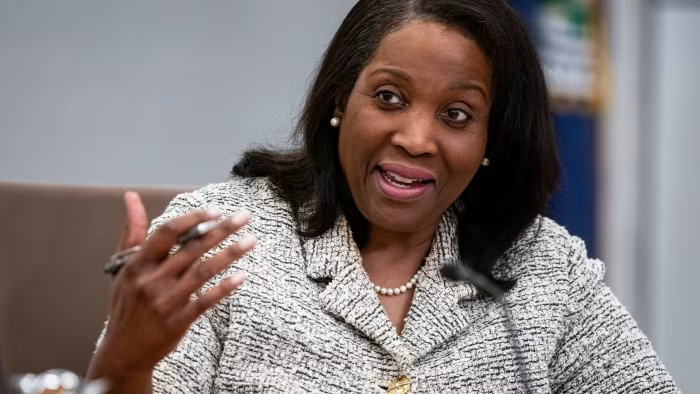
New York: In a dramatic show of force on August 20, 2025, former U.S. President Donald Trump publicly called for Federal Reserve Governor Lisa Cook to resign, citing allegations regarding her mortgage filings—news that rattled global markets and sent the U.S. dollar lower.
The controversy centers on claims made by Bill Pulte, director of the Federal Housing Finance Agency and an ally of Trump, who alleges that Cook designated both a property in Michigan and a condominium in Atlanta as her primary residence—potentially to secure better mortgage terms. These actions reportedly occurred in mid‑2021, prior to her appointment to the Fed in 2022. Pulte has urged Attorney General Pam Bondi to open an investigation.
Markets immediately responded to Trump’s statement, with the U.S. dollar weakening following investor concerns over political interference in the traditionally independent Federal Reserve. Some gains were later moderated after minutes from the Fed’s latest meeting revealed that only two policymakers had supported an interest‑rate cut last month, tempering fears of a dovish policy swing.
The dollar’s decline signals unease among investors who view their financial interests as jeopardized by every perceived move to politicize the central bank. Marc Chandler, chief market strategist at Bannockburn Global Forex, summed up the sentiment succinctly: “The market has voted with its pocketbook that it doesn’t like when the president interferes with the Federal Reserve.”
Meanwhile, Governor Cook has firmly rejected the resignation demands. She characterized the push as political bullying and insisted she will not step down. In a strong statement, Cook emphasized her commitment to transparency, stating she will respond to any legitimate inquiries with accurate information.
These developments add to mounting concerns over attempts to reshape the Fed’s leadership. Trump has already appointed two new governors and nominated Stephen Miran to replace Adriana Kugler, who recently vacated her seat. However, a reshuffle remains difficult as many Biden-appointed governors serve lengthy terms, preserving an institutional buffer against abrupt change.


