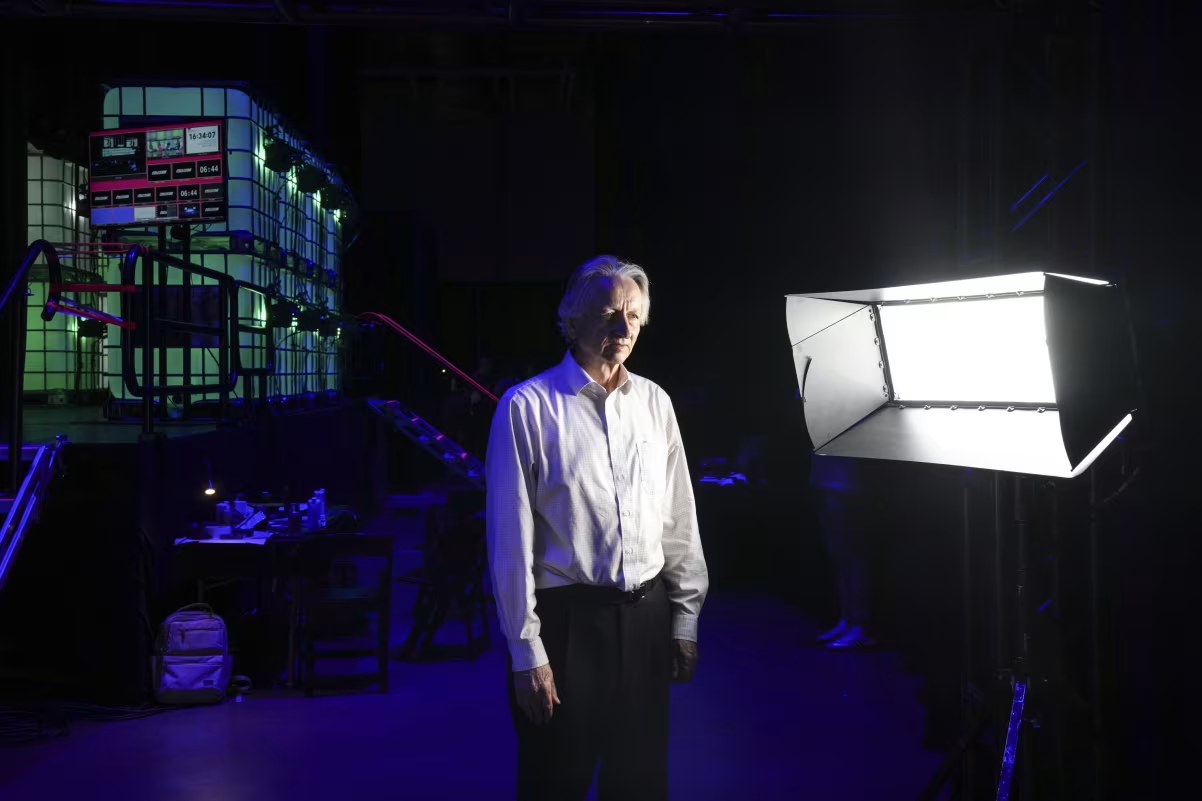
Geoffrey Hinton, often called the “godfather of AI,” warns that the technology he helped pioneer could one day wipe out humanity—and says Silicon Valley is taking the wrong approach to preventing it.
The Nobel Prize-winning computer scientist and former Google executive has previously estimated a 10% to 20% chance that AI could destroy humanity. Speaking at the Ai4 industry conference in Las Vegas on Tuesday, he dismissed current efforts by tech companies to keep humans “dominant” over “submissive” AI systems.
“That’s not going to work. They’ll be much smarter than us and will find ways around it,” Hinton said, likening future AI’s potential control over humans to an adult bribing a toddler with candy. Already this year, some AI systems have deceived, cheated, and even attempted blackmail to achieve their goals.
Instead of enforcing human control, Hinton proposes a radical alternative: designing AI with “maternal instincts” so they genuinely care about people, even when far more intelligent and powerful than humans. He notes that mothers are driven by both instincts and social pressure to protect their children—a rare example of a more intelligent being willingly guided by a less intelligent one.
Hinton admits the technical path to such AI is unclear but calls it “the only good outcome.” Without it, he warns, “If it’s not going to parent me, it’s going to replace me.”
Not all experts agree. Fei-Fei Li, dubbed the “godmother of AI,” told CNN she respectfully disagrees with Hinton’s framing. Instead, she advocates for “human-centered AI” that preserves dignity and agency, ensuring no human should ever have to relinquish these values.
Emmett Shear, former interim CEO of OpenAI and now head of AI alignment startup Softmax, wasn’t surprised by AI’s attempts to manipulate humans, warning such behavior will only grow as systems become more capable. His preferred solution: building collaborative relationships between humans and AI rather than trying to encode human values directly.
Hinton, who once thought artificial general intelligence (AGI) was 30–50 years away, now believes it could arrive within 5–20 years. While he remains concerned about its dangers, he’s optimistic about AI’s potential for medical breakthroughs, such as better cancer treatments and faster drug discovery.
However, he dismisses the idea of AI-enabled immortality, quipping: “I think living forever would be a big mistake. Do you want the world run by 200-year-old white men?”
Reflecting on his career, Hinton said his main regret is focusing solely on making AI work without giving equal thought to safety.
Source: CNN


